BHCLT is looking for new directors

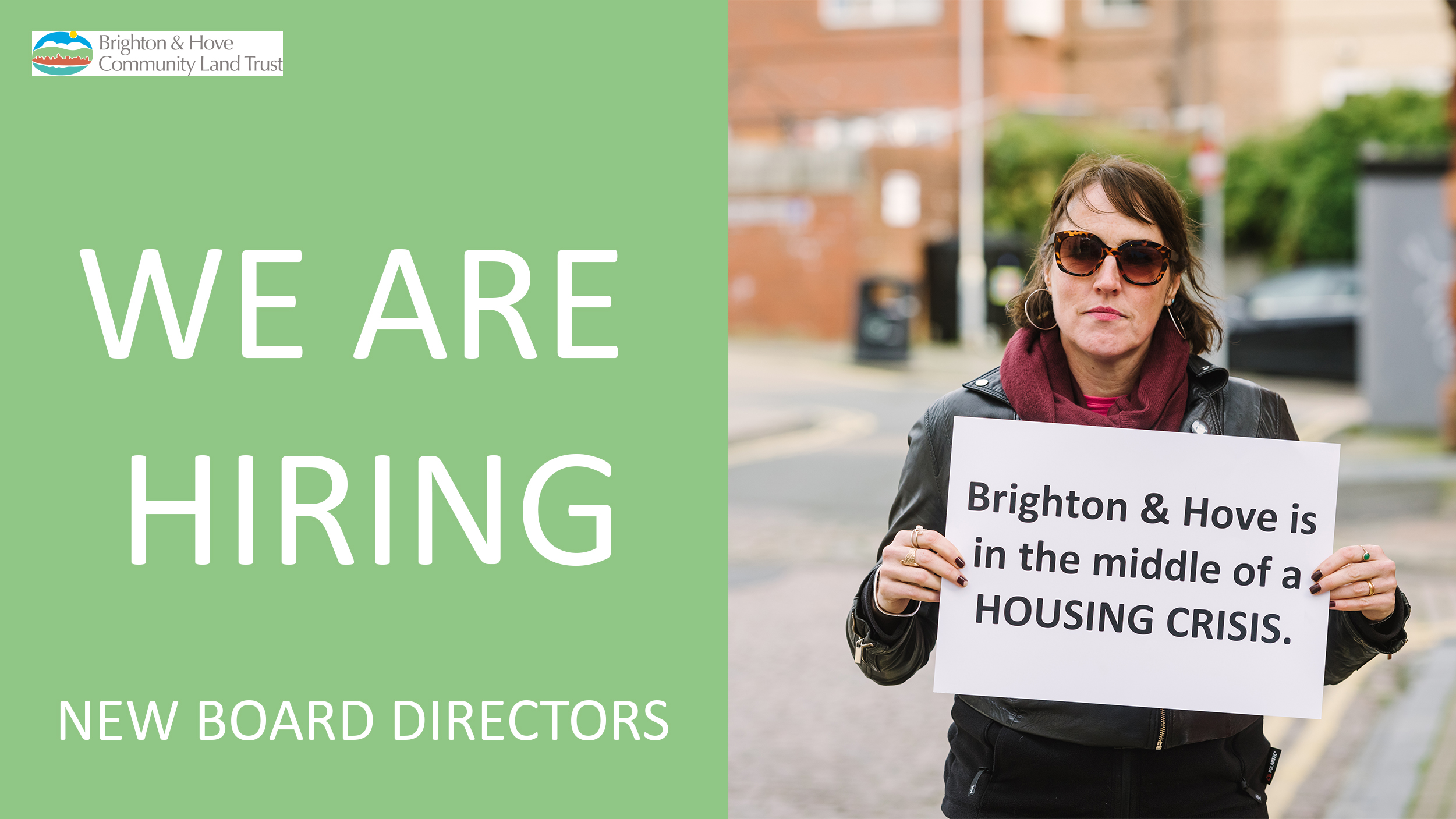
Do you have the energy and enthusiasm to make a difference to how community led housing is developed within Brighton? We are looking for people to bring new skills and experiences to our board.

You don’t need to be a housing expert — just bring your enthusiasm, commitment, and a willingness to learn. We want directors from all walks of life, especially those who reflect the diversity of our city.

If you’d like to get involved in shaping community-led housing and making a difference locally, we’d love to hear from you!

What’s expected

Directors are responsible for steering BHCLT’s strategic direction. Our priorities for 2026-2027 are as follows:

Being a great landlord through our partnership with SEASALT Housing Co-operative.

We own a house in Mouslecoomb that we purchased in 2021 and lease to SEASALT student housing co-operative. Many of our members were investors to make this project happen!   

Our role goes well beyond owning the house. We meet regularly with SEASALT and support each new group of students. As landlord, BHCLT is responsible for ensuring the property is well maintained and safe, as well as managing the financial responsibilities associated with the mortgage, lease and long-term stewardship of the home.

We are also working with the University of Sussex to strengthen the partnership and embed learning about co-operative housing, governance and sustainable community-led housing into the experience.

We are particularly keen to recruit directors who have the skills, experience or enthusiasm to help us do this well. That might include an interest in property and maintenance, finance, governance, co-operative development, working with students and young people, or simply a commitment to helping an innovative co-operative housing project thrive.

Ensuring BHCLT runs well as an organisation and plays an active role in opportunities across the city.

This includes helping to make sure we have strong governance, sound finances, clear priorities and the capacity to deliver our work effectively. It also means building relationships with partners, contributing to wider conversations about housing and community-led development, and identifying opportunities where BHCLT can make a positive difference in Brighton & Hove.

We expect directors to commit at least 1 day per month to CLT activities. This includes regular board meetings, which currently take place on Monday evening at 6pm generally online. 

We’re specifically looking for a Treasurer

The Treasurer maintains an overview of the organisation’s finances, ensuring its viability and that proper financial records and procedures are maintained. A volunteer supports with the day-to-day book-keeping, and the Treasurer oversees and presents budgets, accounts and financial statements to the board, and monitors and reports on the financial health and sustainability of the organisation.

It would be great if you have previous accountancy or Treasury experience, especially in a small organisation, and preferably also experience with Quick Books.

Interested?

You must join BHCLT before applying to become a director. It’s just £1 to do – join here

If you are interested in applying please email admin@bhclt.org.uk, sending your cv and a short summary (200-300 words) setting out your skills, experience, time commitment and why you want to be part of the BHCLT Board. Please send us this by 7th October. 

Current members of the board will arrange to meet you in advance to find out more about you and ensure you understand BHCLT’s ambitions and challenges.

New directors will be elected at our AGM which will take place online on 21st October 6-7.30pm.
Our BHCLT Cooperative Housing Tour was a Success!

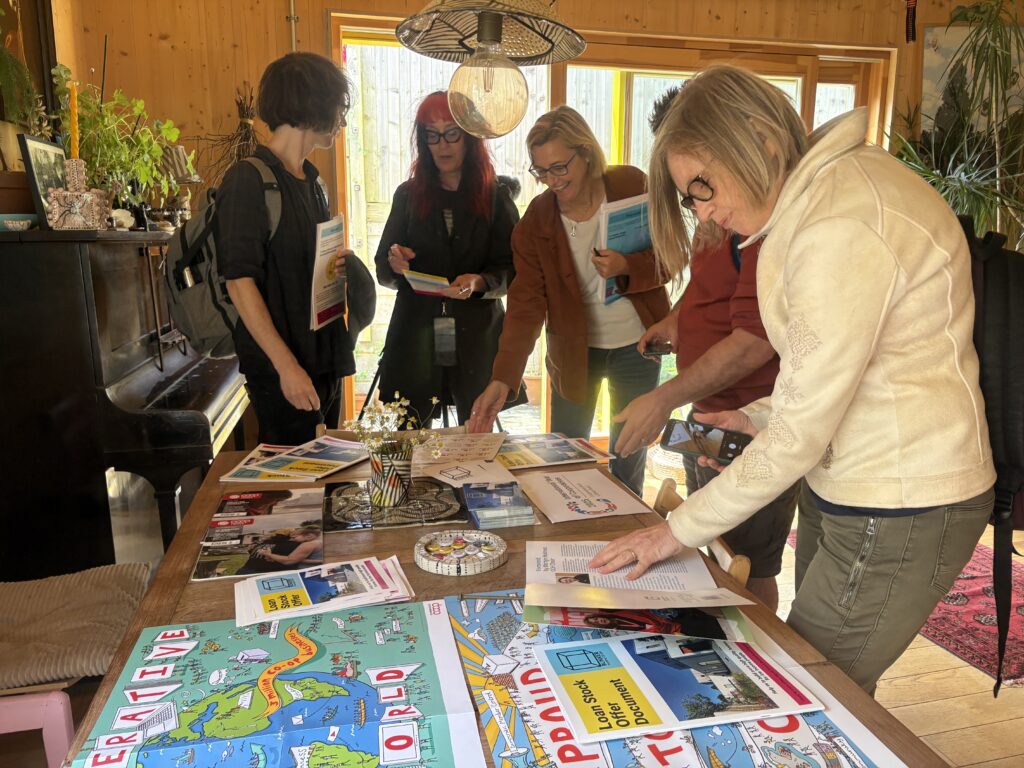
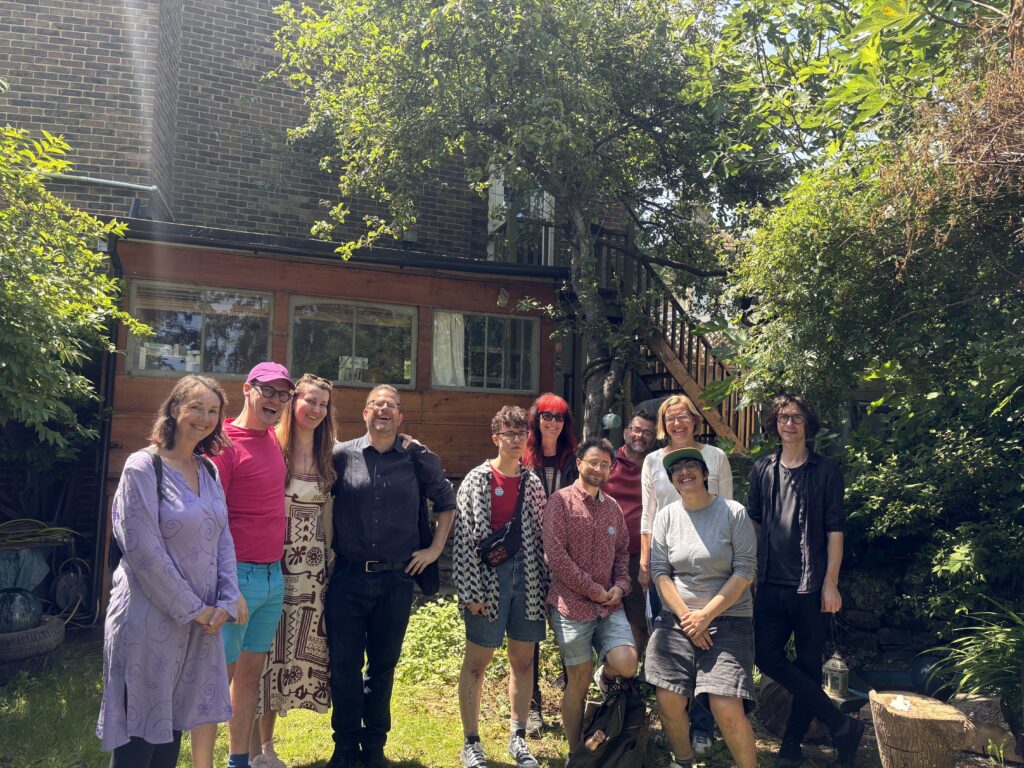
Tour participants learning about co-op living at Two Piers

On Saturday, 14 June 2025, the BHCLT successfully hosted a local cooperative housing tour, drawing participants from across the city and beyond. The event was held in celebration of the 2025 UN International Year of Cooperatives and was supported by the University of Sussex.

Participants visited five local housing cooperatives: Rosa Bridge, Bunker, SEASALT, Out Of Town and Two Piers. Each co-op showcased a unique approach to cooperative living ranging from long-established communities to self-builds to a student housing cooperative. For more information about each co-op, visit https://bhclt.org.uk/celebrating-housing-cooperatives-locally-and-globally/ 

The tour brought together a diverse group of attendees, including local councillors, academics, students, housing activists, and people exploring cooperative housing as a future option for themselves. This mix of perspectives led to rich conversations and an inspiring exchange of ideas.

Throughout the day, participants had the chance to learn directly with co-op residents and see their homes. They heard first-hand accounts of the history of each home, learned how residents organise and manage their shared spaces, and explored the practical and emotional aspects of cooperative living. Key discussions included how co-ops resolve internal conflicts, how new members can join, and the financial models that sustain these projects.

Beyond logistics, participants were immersed in the deeper principles of solidarity, mutual aid, and belonging that underpin cooperative housing. These values were evident not just in the stories shared but in the lived reality of the homes themselves, spaces shaped by trust, democratic decision-making, and collective care.

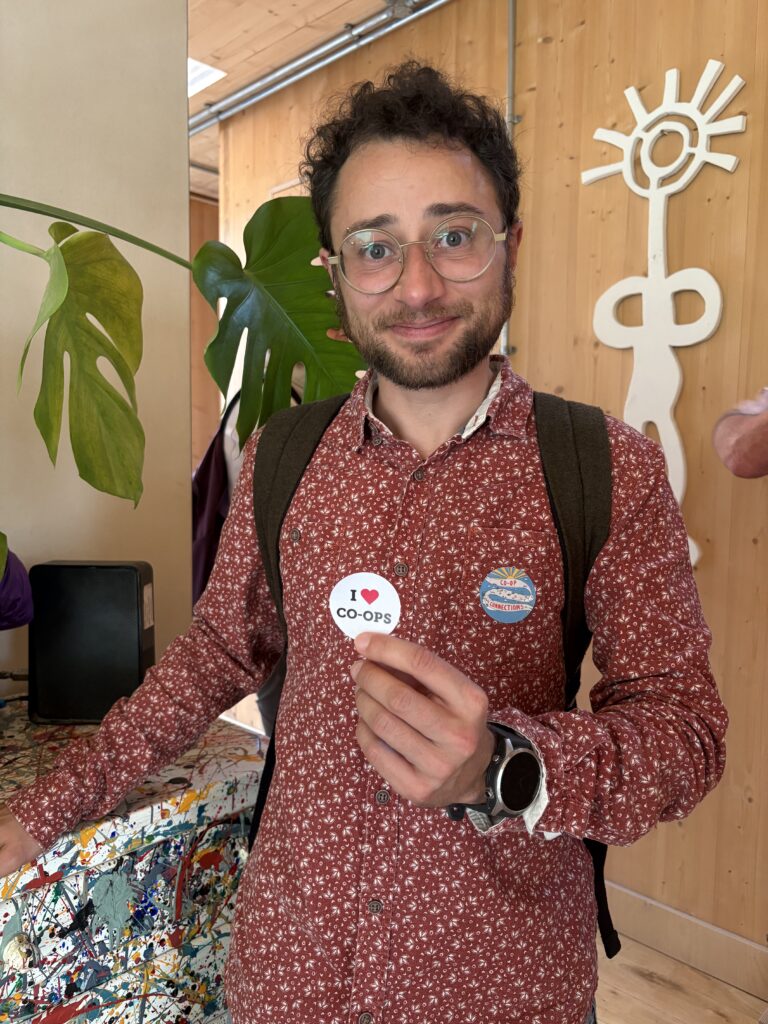
Learning more about the co-operative movement at Bunker

One tour participant reflected on what they learned:
“I learned a great deal, much of which was entirely new to me. The variety of models you showed me was particularly striking. What stood out most was how each project effectively decommodified the property it occupied. I understand that this is not necessarily the main purpose of a co-op, but it seems like a very positive side-effect. In terms of lifestyle, the way of living seemed fairly standard to me. The main difference was the strong emphasis on organisation and collective management.”

This kind of knowledge exchange is exactly what the BHCLT Coop Tour aimed to foster, strengthening the wider movement for community-led housing. As a co-op resident summed it up perfectly during the tour:

“Cooperativism is the fundamental truth about human life – we all know we need each other. Sometimes we clash, but we keep showing up, because it’s a mutual exchange, and that’s how we live in solidarity.”

The event highlighted the power of community-led solutions to the housing crisis, showcasing alternatives that are affordable, sustainable, and grounded in local resilience. BHCLT thanks all participants and supporters, especially the residents who generously opened their doors and shared their experiences and Sussex University.

Support the Movement

If you believe in community-led housing and want to support BHCLT’s ongoing work, please consider making a donation

Every contribution helps us fund projects, offer training, and expand access to cooperative housing across Brighton & Hove.

Follow & Share
For photos, stories, and reflections from the tour, check out our social media channels:
LinkedIn  Facebook

Designed out – a hoop dance

A brilliant short film by one of the Who Owns Brighton? participants as part of their MA in Architecture and Design, based on Circus Street. Portraying the life of a dancer from a low-income background who has been displaced from the city, this film aims to convey how it feels to be designed out.

Listening to Circus Street

This blog post was written by Dr Bethan Prosser who facilitated one of the participatory workshops for the Who Owns Brighton community researchers, specifically focusing on creative, sensory and place-based methods.

Listening to Circus Street was an additional workshop offered to community researchers interested in creative, sensory and place-based methods as part of the Who Owns Brighton (WOB) project. The workshop offered the participatory listening research toolbox for community researchers to try out around the Circus Street redevelopment. Dr Bethan Prosser, who has been developing this toolbox and led the workshop, shares what we did and learnt.

I’ve been blown away by both the energy and commitment of the community researchers involved in WOB as well as the amount of rich data they’ve gathered about Circus Street. So it was a brilliant opportunity to offer some of the tools I have been developing in my academic research through this workshop and learn together about the site sonically. Participatory listening research is a way of listening with others to the environment to generate new knowledge and discoveries, whilst embracing different listening experiences, practices and positionalities.

We met on a Saturday morning at Barnard Community Centre and started off with a Deep Listening exercise to tune into our ears. I then led silent walk down Carlton Hill into Circus Street and gave everyone the task of spending time silently listening around the site, before capturing observations. It was interesting to note the initial challenge of being quiet – when the group had so much to catch up on and share about their latest findings. But people relaxed into the activities and many enjoyed being given the permission just to immerse themselves in the place they have been researching.

As we walked back up the hill, we paired up to share what we’d noticed through listening. These conversations continued into a fascinating group discussion once back indoors, which I structured through thinking about four types of “sound stimuli”: the notable qualities of the sounds; sound surprises; ideas sparked by sounds; and stories or memories triggered through listening (from my PhD project – Prosser, 2022).

The overall impression was quietness and silence – “like the volume had been turned down”. Absent were the “sounds of home” or human interaction, other than at the Dance Studio or a pop-up market that was setting up. The market came as a surprise, especially as most people had experienced the space as “dead” and “sterile” during previous visits.

Mostly Circus Street felt like a place to pass through, cut off and disconnected from the rest of the city. This sparked discussion about what was promised by the developers  – buzzing, vibrant and award-winning – in contrast to what is sonically experienced there. One person noted “it’s the least circusy experience ever”. With others drawing on their historical research to think about what the past market soundscape might have been like.

After lunch, we moved onto drawing soundmaps using maps of the site, tracing paper and arts materials. These continued the themes of the site being a “space of passage”, with “sound sanctuaries” of human activity centred around the Dance Space and the green square where the market was setting up. The buildings’ ventilation systems were the main dominant sounds in the central area, with a lack of birdsong. This was pinned to the empty birdboxes, with one person writing: “bird boxes look sad, just as empty as the flats”. Interestingly, three of the maps used the word “ghosts”: “ghost circus” ; “the ghosts of what could have been”; and “the only life here is ghosts”.

So what contributions did we make to the project’s research questions through this workshop? Although it was just a one-day listening snapshot, we did make some contributions to the questions about what the redevelopment has produced and how people experience it. Our key overall findings are:

  • the redevelopment has produced a distinct acoustic environment, which contrasts with the surrounding city
  • there’s an uncomfortable juxtaposition between what was promised by the developers and what has been produced sonically e.g. “buzzing” vs “sterile space”
  • these acoustic dimensions impact the way people behave in the site e.g. a place to move though, not stop or interact in
  • listening and soundmapping can aid reflections and provide insightful engagement with a redevelopment site during a community research project

Thank you to everyone that took part, the working group for organising, Barnard Community Centre and the funders (Civic Power Community Action Fund and ESRC South Coast Doctoral Training Partnership).


Come to our Action Day!

Following our series of workshops, the Who Owns Brighton? group of community researchers started looking into what they could find out about Circus Street through its history, the people who live and work there, the development process, where the money from development goes and what this tells us about housing and development in the city.

We’re now hosting an action day on 29th June at Circus Street where we will:

  • share the findings from this research
  • think about the critical points, how to present them, and how to use these to engage with policy and decision makers
  • explore some of the actions and ideas that have come out of the project and where we want to take it next.

The day is open to everyone, whatever the level of participation in the project to date. It will be a mix of presentations from the research groups and whole group discussions and activities. It will be informal with regular breaks and lunch and refreshments will be provided.

Book here


Join us for our AGM

We look forward to welcome our members to our AGM on Wednesday 27th September 6.30pm for a 7pm start at The Railway Club, 4 Belmont, Dyke Rd, Brighton and Hove, Brighton BN1 3TF.  Please take a look at the papers for this event on the links below.

We will update people with what’s happened over the year, approve our accounts and elected new directors.  Helen Bartlett will also present an exciting new project called “Who Owns Brighton”.   If you haven’t already, please let us know you are coming.

You don’t need to be a member to come along, but only members have a vote. If you aren’t already a member, you can join here

Papers

BHCLT Agenda 2023

Last year’s minutes for approval

Our annual accounts for y/e 31st March 2023

Our annual report


Want to help build the movement for community led housing and land in the city?

Who we’re looking for

A membership director

We are looking for someone to take accountability for our membership strand of work.   This includes managing our membership database, communicating with members and wider audiences, having an active presence on social media, creating a calendar of events for our monthly meet-ups,  bringing in inspirational speakers and other event/workshop activities, plus involvement with relevant local and national networks.

You should have skills and experience in some of these areas and feel excited about mobilising and bringing people together. We would ideally like someone who has the time and capacity to take a more hands-on role, however the role could also involve scoping out the programme of work for the year and seeking funding to bring on board capacity to make it happen.

Treasurer

We are looking for someone to take on the role of BHCLT Treasurer. The Treasurer maintains an overview of the organisation’s finances, ensuring its viability and that proper financial records and procedures are maintained. Day-to-day procedures are delegated to the Hub Co-ordinator and the Treasurer oversees and presents budgets, accounts and financial statements to the board, and monitors and reports on the financial health and sustainability of the organisation.

You should have previous accountancy or Treasury experience, especially in a small organisation, and preferably also experience with Quick Books.

People to bring new skills and experiences to our board

We are hoping to recruit people who are currently under-represented on our board. This includes people with experience of insecure housing, people of colour, and younger people. We would like people who can bring new skills, perspectives and experiences to the work that we do. Experience of working in other groups and voluntary organisations is useful but you don’t have to have previous experience of community led housing, we will provide support and opportunities for training.

What’s expected

Directors are responsible for steering BHCLT’s strategic direction. Our priorities for 2021-23 are:

  • Buying our first property and being a great landlord through our partnership with SEASALT
  • Creating a more active and involved member network, through which learning and knowledge flows
  • Working with BHCC to create a more positive framework for CLH in the city
  • Ensuring BHCLT runs well as an organisation

We expect directors to commit at least 1 day per month to CLT activities. This includes monthly board meetings, which currently take place on a Friday morning, but can be rearranged at a time that best fits the group. There are also sub-group meetings to attend and Directors need to keep up to date with developments within the Trust, working with a part time Hub Co-ordinator.

Interested?

You must join BHCLT before applying to become a director It’s just £1 to do – find out more here: https://bhclt.org.uk/membership/

Please get in touch via email helenbartlett@bhclt.org.uk by Monday 29th August if you are interested in applying. Current members of the board will arrange to meet you in the first week of September, to find out more about you and ensure you understand BHCLT’s ambitions and challenges. You will then be asked to write a short summary (200-300 words) setting out your skills, experience, time commitment and why you want to be part of the BHCLT Board. This will need to be submitted.by the end of Wednesday 15th September, together with the names of two referees.

If you would like to find out more about what we’ve been up to over the past year, this website is a good place to start. You can also check out our Facebook and Twitter profiles, which is where we’re most active on social media. This folder also contains some of our key documents and policies, that underpin the work we do as well as recent and current areas of work.


SEASALT outreach – a year in review

As well as moving into a new home, SEASALT members were involved in lots of outreach in 2021 – spreading the word about co-ops and student housing co-ops in particular. Tom tells us what they’ve been up to over the year:

“Two of the fundamental aims of SEASALT, and we believe any co-operative, are education and community. Teaching our members, the wider student body and the public about co-operatives which we hope creates a vibrant community of knowledge and skills sharing. This year, we’ve worked hard to lay the foundations for both.

Starting as far back as late 2020 (remember that?), we received an invitation to talk at Action Hampshire, a rural Community Led Housing (CLH) event held over Zoom in January. Sim, Matt and I (Tom) took on this task, the first such event for Matt and I and thus a little bit dauting.

It was a great success though and we were scouted by Paul Kelly the director of Breaking Ground Liverpool, a community led housing festival for the Liverpool city region hosted in March. Perhaps a bit overconfident from our first achievement, we went in with les preparation and subsequently a bit more disorganisation! Nonetheless, we delivered an effective presentation to wide ranging audience including Liverpool city councillors. City councillors stayed in contact and now want to set up housing co-op of their own as part of CLH developments resulting from the Metro Mayors land commission. The first of its kind in the UK.

As the British summer slowly came to life, Sim and I packed our bags and headed for Stir to Action’s ‘Playground for the New Economy’ festival, a 3-day campout with talks and workshops at the beautiful Selgars Mill site in Devon. Sim was almost ready for her talk with just a tiny bit of last-minute preparation on the train. “From Cottagecore on TikTok to Housing Co-ops”, she explained the cottagecore aesthetic that is an ideal for many young people (look it up its not dodgy trust me) and explored the ways that we can translate this into a real-life passion for co-ops and radical change. I also met so many wonderful people at Selgars Mill from the Friends of the Joiners Arms (and their drag comrades Lèse-Majesté) to Ben who was a member of a tech co-operative up north in Newcastle.

By the Autumn, we had just completed the purchase of our first house (whoop!) and we were attending York Design Week to share our success and knowledge. This time, alongside Paul Kelly and various other groups including local squatters and YourSpace CLT. Late September is conference season, well, so say my friends involved in parliamentary politics. We saw it as an opportunity to take on an old cliché and deliver our ideas and vison to the corridors of power, in our case, the conference hall of Young Labour. Sadly, for various reasons we couldn’t take up this invitation but we did accept an offer to talk at the alternative festival, The World Transformed. Titled: “Building Rebel Cities, Brighton and Hove” our very own Ophelia Mancey sat on a diverse panel which included: Sussex Homeless Support, Landscapes of Freedom, a mass trespass movement who want to open private and disused land for public access, Reclaim Pride whose aim is to build stronger LGBTQ+ communities, mutual aid networks and get back to the roots of Pride, Sussex Renters Union who won millions of pounds in compensation for students over the pandemic and chaired by Nehaal Bajwa, Diversity, Access and Participation Officer of Sussex University Student’s union. We feel that it is important to give as many of our members as possible a chance to partake in all aspects of our work including our outreach. I offered to work through the talk with Ophelia beforehand and share with her what I had learnt from previous events. She did a brilliant job and personally I think this was one of our best events so far.

So, reflecting on what we’ve achieved and learnt this year, I am reminded by the words of the late Archbishop Desmond Tutu: “There comes a point where we need to stop just pulling people out of the river. We need to go upstream and find out why they’re falling in.” Through the power of education and community, we’ve started to explore why our broken housing market drags so many people into financialised and inescapable situations. Most importantly, we are offering practical solutions by sharing our own experiences and knowledge, gradually building up robust communities bursting with so many beautiful ideas. This gives me hope for a more positive future filled with democratic, affordable, and sustainable answers to all the issues we face in our neighbourhoods and in this country. I hope it fills you with the same energy. I certainly hope you’ve enjoyed being a part of our community so far, we look forward to building with you further in 2022 and beyond.

Solidarity and best wishes for the new year

Tom and everyone at SEASALT Housing Co-operative”

Joint Statement Brighton and Hove Community Land Trust (BHCLT) and Coldean Community Organisation (CCOrg) site 21a and 21c

The Site:

The site 21a was identified in the Urban Fringe review as having potential for housing and this was confirmed in the city plan.  The site was put on the community-led housing pathway.

How we got together:

CCOrg was established following a community organising process, supported by BHCLT.

A formal partnership was established between CCOrg and BHCLT to develop proposals for community-led housing (CLH) on the site following the successful bid to Homes England fronted by BHCLT, and agreed on the basis that any proposals developed would respond to the needs and aspirations of the Coldean community and have a positive impact the wider city.

What we did

We formed a steering group for the project with representation from both organisations to oversee the project from team recruitment to pre-planning with 2 design options.

A suite of investigations and surveys was commissioned.

We submitted a proposal for pre-app planning advice at the end of July 2020 and received detailed feedback on 12th November 2020 (with all outstanding comments received by February 2021).

 Why we are stopping working together

We have agreed to terminate the partnership due to a divergence of visions and a breakdown of trust between the organisations. These have been clarified during conversations between BHCLT and CCOrg following the response to the planning pre-app for 47-59 homes on the site. We have held a series of regular meetings in an attempt to resolve these differences but in the end, it has become clear that, despite all our best efforts, we are unable to negotiate the difference in positions to continue the partnership.

BHCLT perspective BHCLT has a ‘housing first’ approach and wants to maximise the use of housing on the site within the context of the landscape and ecology. BHCLT sees Coldean site 21a as the only site currently with the potential of achieving a large-scale CLH project.  BHCLT sees the pre-app submitted as sensitive to the site’s ecology and landscape but does not have the appetite to take it forward without the agreement and support of the local community organisation. On this basis, BHCLT is not going to be directly involved in taking forward this site in the foreseeable future.

CCOrg perspective CCOrg has an ‘ecology first’ approach that seeks to continue its pledge to the community to explore whether housing could sit within the context of land stewardship. The project was pushed to consider higher density than identified on the Urban Fringe Assessment, and there is concern that the resulting designs are therefore not appropriate within the context of such a sensitive Urban Fringe site, due to the impact on pre-existing wildlife & woodland.

The ecologists report that there are areas of rare chalk grassland on the site which CCOrg will seek to regenerate. CCOrg is committed to delivering a small number of low impact houses, if appropriate, once the area’s ecological decline is stabilised. CCOrg intends to complement local nature recovery networks as a priority given the haven the site offers to both humans and wildlife from the surrounding encroachment of intensive development. CCOrg welcomes the opportunity to enable the community and BHCC to work together to explore a holistic approach to the city’s land and human’s relation to it, with an exemplar nature-led community project that can link the city back to Stanmer and the SDNP beyond, embracing the social value and volunteer workforce that this would bring.

Deciding to end the partnership has not been easy for any of us and, despite our differences in approach, both organisations feel that the opportunities presented to CLH by site 21(a) and (c) should not be missed to do things in a forward-thinking, sensitive, and locally appropriate way.

Urban Fringe Manifesto

Some sites designated for housing in the City Plan are in the Urban Fringe.  We have a draft document that we want to discuss with our members that sets out the facts of housing supply alongside the implications of the Urban Fringe sites in the City Plan. We want to share the facts, hear our members’ views, before finalising this document.  We will be hosting a space as part of our meet-up on 7th July, 6.30-7.30pm, please come along! The link is on the right hand side of this page. It would be really helpful if you had read the Manifesto beforehand. You can download the document here.

Share Offer learning

In 2020 we ran a share offer, which eventually raised £332,900, which we’re using to purchase our first property. We learnt a lot from this experience, so we wanted to share that with other groups who are thinking or in the process of running their own share offer. You can also download (and share!) the document here.

Key Learning


What’s next after the People’s Assembly

It’s our monthly members meeting Wednesday 5th May 6.30-7.30pm and we’re going to be following up on some of the discussions that came out of our People’s Assembly in March. This will include the proposal to move from #PUSHBACKBRIGHTON to #MAKETHESHIFTBRIGHTON&HOVE and what this could look like, as well as any other proposals that people bring. All members welcome.
 
The zoom link is:
https://us02web.zoom.us/j/83828218646
Meeting ID: 838 2821 8646
 
Find our more about The Shift here https://www.make-the-shift.org/


Community Share Offer Success!

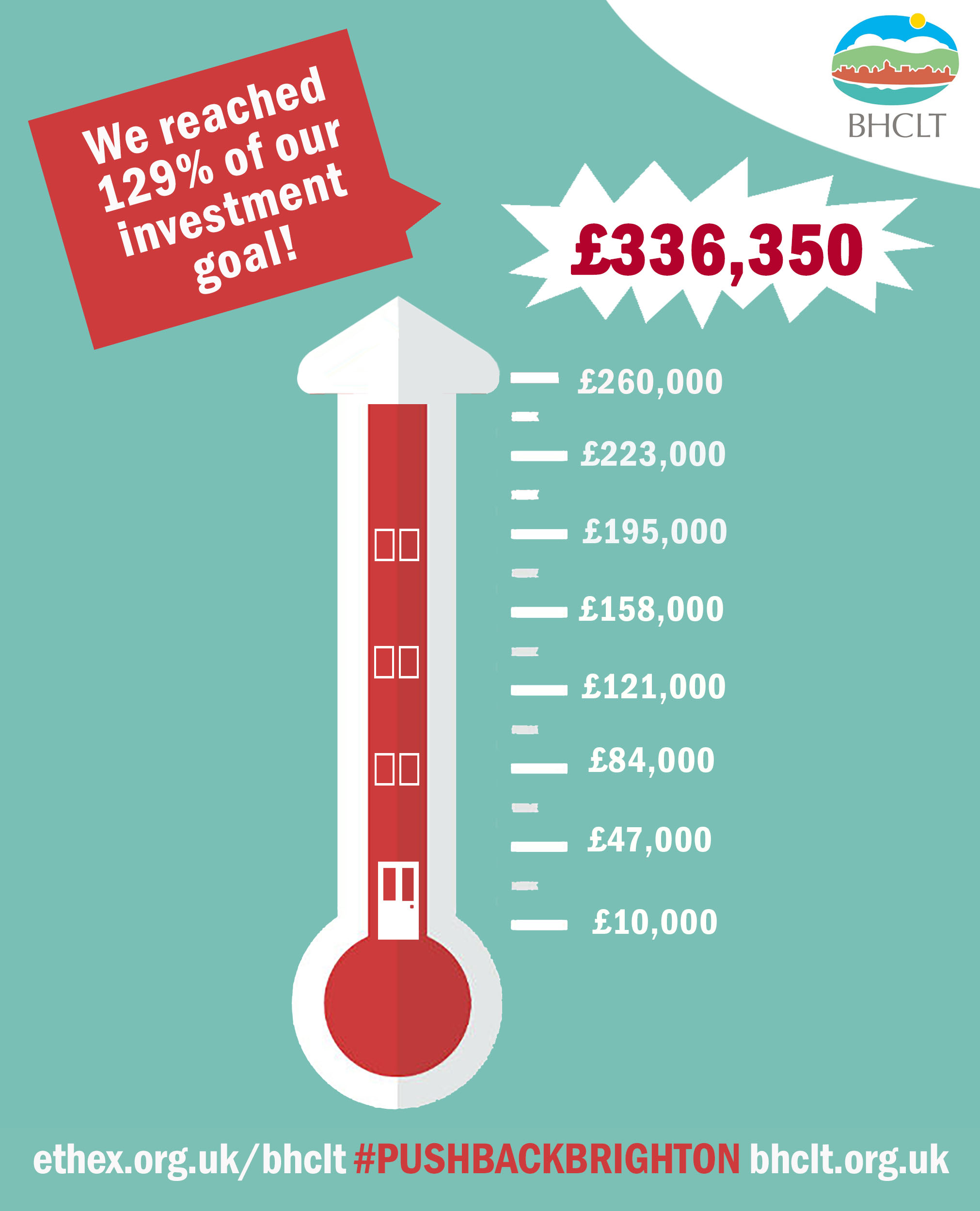
We are absolutely delighted, that not only did we meet our target for our Community Share Offer, we exceeded it by over £76,000, raising a grand total of £336,350!  This is a real landmark for the Trust, allowing us to buy our first property to lease out to Student Housing Co-op, Seasalt. 

Over 150 investors, both individuals and businesses and organisations, contributed to the share offer, and we want to thank everyone who supported us, either by investing, or by sharing and promoting the offer.  Hopefully this will be the first of many!

We want to leave you with this wonderful and positive statement from the latest Seasalt newsletter.  It is great to be part of joint working and community collaboration towards making meaningful change:

 “Looking more generally, there have been many positive steps towards a more sustainable and fairer future around the world this year. Everything from black lives matter to small victories for women and minorities everywhere. Climate change and the environment are now centre stage and we know affordable housing will play a big part in this. We will always stand alongside people fighting for progressive change and if things ever seem hopeless or you are struggling, remember that making the future comes in small steps and with every step you are definitely not alone.

After all, what started as a dream from a few young people with a vision for change at the Sussex Students’ Union is now becoming reality. Our aim has always been to make waves in the student housing market but it strikes us that everyone can make waves in their own individual way.”

Find out more on our Investment Page.

BHCLT Response to Government’s Consultation on Proposed Planning White Paper

At the end of last month (October 2020) BHCLT responded to the Government’s consultation on their proposed Planning White Paper called ‘Planning for the Future’. The paper proposes wholesale changes to the planning system principally in order to speed up the process. The proposed changes have at their heart ‘zoned’ areas, simplifying Local Plans to focus on identifying land under three categories – Growth areas suitable for substantial development, and where outline approval for development would be automatically secured for forms and types of development specified in the Plan; Renewal areas suitable for some development, such as gentle densification; and Protected areas where – as the name suggests – development is restricted. In addition, Section 106 contributions and Community Infrastructure Levy (CIL) will be abolished in favour of one charge called the  ‘Infrastructure Levy’

Our response was based on the response by the National CLT Network. Generally, the paper seems to champion ‘streamlining’ and reducing ‘red tape’ in the planning system which are popular intentions but usually mask a deregulation which benefits large developers and big business; those with power and ready money. We argued strongly that the proposed timetable of 6 months for producing local plans was glaringly inadequate if it is to allow for meaningful engagement by all parts of the community. Along with this, the proposals for replacing s106 and CIL are very vague and there is genuine concern that this will reduce the amount of affordable housing produced by developers. The ‘temporary’ measures that have been proposed include lifting the small sites threshold, below which developers do not need to contribute to affordable housing, to up to 40 or 50 units. This will clearly push up land values even further and dramatically reduce the amount of AH produced.

We will keep you informed as the progress of this White Paper.

Nicola Thomas, Land & Property Enabler, nicolathomas@bhclt.org.uk

BHCLT response to Gov White Paper on Planning Reform Oct 2020

BHCLT Feedback to Brighton & Hove City Plan Part 2

BHCLT responded to the Brighton and Hove City Plan consultation which closed on Friday 30 October 2020. This was the final consultation before formal submission of the plan to the government for independent examination and therefore we were only allowed to comment on whether the plan was legally sound. The soundness tests were based on whether the plan had been positively prepared, justified, effective and consistent with national policy.

Our principle objections were that the plan did not offer new and creative solutions to deliver desperately needed affordable housing in the city eg. community led housing and was a wasted opportunity. We pointed out that the strategic support for CLH voted for by all but one Councillor in August 2020 was not back up by this City Plan and we suggested a number of improvements to the plan to achieve this, including that ALL Council owned Urban Fringe sites should be approached as “public land for public good” and could only be developed with meaningful community engagement, biodiversity and ecology at the heart alongside 100% affordable and 0% carbon housing outcomes. You can view our full response here: BHCLT response to CPP2 consultation Oct 2020.

Introducing our podcast series

Brighton and Hove Community Land Trust (BHCLT) produced a podcast interview series to introduce the work of the CLT to the wider community. The podcast series will feature four interviews exploring the work of the CLT and its partners.

Interview One – Introduction to BHCLT and the work of Bunker Housing Co-op.

This podcast introduces the CLT and the recently completed project at Plumpton Road by Bunker. Also other upcoming projects. Featuring Nicola Thomas (Land and Property Enabler for BHCLT), Amy Hall (member and treasurer of Bunker Housing Co-op) and hosted by Patrick Olszowski (Outragreous Impact)

Join the CLT for £1

Interview Two – Students tackling the Housing Crisis

This interview features SEASALT, their work to live in a housing co-op and BHLCT’s Community Share Offer to make this vision a reality.  Featuring Helen Bartlett (Hub Organiser and Investment Coordinator at BHCLT), Ruthie Walters (founding member of Seasalt Student Housing Co-op) and hosted by Patrick Olszowski (Outrageous Impact.

Find out more about the share offer and invest